John Deere parts tax-deductible for farmers
When farmers invest in maintaining their equipment, a common question that arises is, “Are John Deere parts tax-deductible for farmers?” Understanding the tax rules related to farm equipment repairs, replacements, and maintenance is essential for maximizing deductions and managing operating costs. In most cases, expenses associated with keeping farm machinery in proper working condition are considered necessary business expenses. Because tractors, harvesters, and other machines are vital to agricultural operations, the costs of buying and installing replacement John Deere parts often qualify as deductible expenses. However, farmers need to be aware of the rules regarding repairs, improvements, depreciation, and proper documentation to ensure they take advantage of all allowable tax benefits.
Farm equipment repairs are generally tax-deductible when the repairs are ordinary and necessary for business use. If you purchase John Deere parts to fix a malfunctioning engine, replace worn-out belts, restore hydraulic lines, or repair electrical systems, these costs usually fall under deductible repair expenses. This is because such replacements do not change the machine’s overall function or extend its useful life dramatically; instead, they keep the equipment operating as intended. Routine maintenance using items like filters, spark plugs, fuel injectors, and similar components is also typically deductible. Since these are recurring expenses required to maintain equipment performance, they can be listed as operational costs on a farm tax return.
There is an important distinction, however, between repairs and improvements. If the purchase of John Deere parts significantly upgrades, enhances, or prolongs the useful life of a machine, the expense may fall under capital improvements rather than repairs. For example, installing a new high-performance engine, upgrading a hydraulic system, or adding advanced electronic controls may increase the machine’s long-term value. In such cases, the cost may need to be capitalized and then depreciated over several years instead of being deducted fully in the year of purchase. Farmers must determine whether the parts they buy serve as simple repairs or represent major upgrades to avoid mistakes during tax filing.
Even though improvements must be depreciated, this still provides a tax benefit. Many farmers take advantage of Section 179 deductions, which allow accelerated depreciation for qualifying equipment and certain improvements. This tax rule may allow farmers to deduct a large portion—sometimes even the full cost—of machinery upgrades in the same year they are purchased. If the John Deere parts qualify as improvements rather than repairs, Section 179 can help ensure the tax advantage remains substantial. For farmers making major investments in new components, engines, or attachments, this can significantly reduce taxable income.
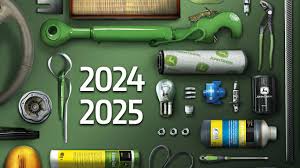
Are John Deere parts tax-deductible for farmers?
Another key factor in claiming tax deductions is proper documentation. Farmers must keep receipts, invoices, and service records detailing the purchase and installation of John Deere parts. These records should clearly show the business purpose of the expense, the machine repaired, and how the parts were used. Good documentation protects farmers during audits and ensures that all valid deductions are accepted. Cataloging expenses for each machine separately is often recommended because it helps maintain accurate equipment records and simplifies tax preparation.
Many farmers also deduct labor costs associated with installing the parts. If a technician installs the replacement components, the labor charges are usually considered deductible repair expenses. Even if the farmer performs the repairs personally, the cost of the parts themselves is still deductible as long as the equipment is used for farming activities. The IRS typically allows deductions for all ordinary and necessary maintenance-related expenses, so long as the purchase relates directly to the operation of farming equipment.
It is also important to consider whether the equipment is used exclusively for farming or shared with personal use. If a tractor or other machine is used both for agricultural work and personal tasks, farmers must allocate the expense proportionally. Only the portion related to farming can be deducted. When John Deere parts are installed on equipment that is used solely for farm operations, however, the entire expense is generally deductible. Farmers should maintain accurate records of equipment usage to ensure they calculate this correctly.
Seasonal and high-use farmers often replace parts more frequently due to increased operational demands. These ongoing replacement costs can add up, but because they qualify as necessary business expenses, they help reduce taxable income. Using high-quality John Deere parts also contributes to better machine performance and reliability, meaning fewer breakdowns and more consistent productivity—an added benefit beyond tax savings.
In summary, the majority of John Deere replacement parts purchased for repair and maintenance purposes are tax-deductible for farmers. Routine repairs, upkeep, and necessary replacements usually qualify for full deduction in the year of purchase. Larger upgrades considered capital improvements may require depreciation, but they still provide meaningful tax benefits through Section 179 or other depreciation methods. Farmers who keep thorough records and understand the distinction between repairs and improvements can maximize their deductions effectively. Investing in genuine John Deere parts not only keeps equipment running efficiently but can also contribute to smart tax planning and reduced operational costs.